
Political
The Political Levy
Why does the CWU do political work?
The decisions that affect our members at work aren’t just made by employers. The government also has a major say in our working lives.
Holiday pay, sick pay, the minimum wage, paternity leave, working hours, pensions, protection from discrimination and unfair dismissal, and our ability to be represented by a trade union are all affected by government decisions.
Government policy can also have a direct impact on the industries in which our members work. In telecoms, for example, decisions about investment in broadband and digital infrastructure, regulation of the industry and the future of the UK’s communications networks can all affect our members and their jobs.
That’s why, to stand up for our members, we need both an industrial voice and a political voice.
What about broader issues?
We also stand up for members on issues that affect them and their families outside the workplace.
We campaign for proper funding for the NHS, decent housing and action against rip-off rents, a state pension that provides a decent standard of living, and investment in services such as schools and public transport.
We also campaign for action on the cost of living, inequality and social mobility, and against discrimination.
These campaigns aren’t decided by one person. They are agreed through the CWU’s democratic structures, including Conference, the National Executive Council (NEC) and other committees.
What political work does the CWU do?
We campaign nationally and locally, putting pressure on governments and politicians to influence decisions that affect our members.
We support and train CWU members who have worked in our industries and want to become more politically active.
We develop and promote our own ideas about the industries our members work in, including telecommunications, broadband and postal services.
We campaign for investment in the UK’s communications infrastructure, good-quality jobs and the skills needed to support the future of our industries.
We work with other trade unions and organisations that share our values to build support for our campaigns, from employment rights to the NHS.
What about the Labour Party?
The CWU is affiliated to the Labour Party. This gives us a voice in its policy-making and an opportunity to argue for policies that stand up for our members.
We also support CWU members from our industries who want to become politically active, including seeking selection as Labour candidates. This helps ensure that the views and experiences of our members are represented in politics.
The Labour Party is the only political party that gives trade unions like the CWU a formal role in its policy-making. This is an important way for us to influence political decisions.
Because of this relationship, we secured a number of important commitments in the Labour manifesto at the last election, including the renationalisation of Royal Mail, significant investment in broadband, stopping Post Office closures, and strengthening employment rights and workers’ voices at work.
What does the political levy go towards?
The 20p-a-week political levy helps fund a range of political work.
This includes lobbying governments and politicians, running wider public campaigns, researching and developing policy ideas, our affiliation to the Labour Party, and providing training and support for CWU members who want to become active in politics.
Branches and Regions also receive a share of the levy to carry out political work locally.
Who makes decisions about the CWU’s political work?
The CWU’s political work is part of our democratic structure. Decisions are made by Conference, the National Executive Council, the General Secretary, and Regional and Branch Committees.
This means our political work is shaped through the same democratic structures that govern the wider work of our union.
The CWU and Politics - a lesson from history
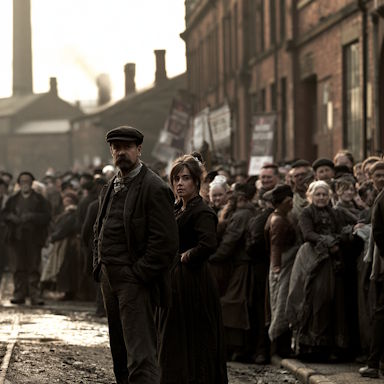
The Labour Party has its roots in the trade union movement. It was founded in 1900 as the Labour Representation Committee (LRC), created by trade unions and socialist organisations seeking parliamentary representation for working people. By 1906 it became the Labour Party and grew into the main political voice of the British working class.
From the outset, the link was formal and influential. Affiliated unions funded the Party, sent delegates to conference and played a direct role in shaping policy. In return, Labour provided unions with political access and legislative reform. After the Second World War, particularly under the 1945 Labour government, this partnership delivered major welfare reforms, improved workers’ rights and the nationalisation of key industries.
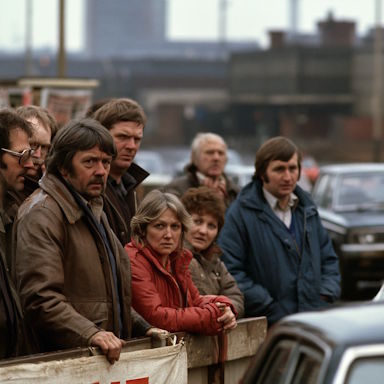
Tensions did arise, notably during the late 1970s “Winter of Discontent,” when industrial unrest damaged both the government and union standing. Even so, cooperation continued, including agreements such as the Warwick Agreement in 2004, which reaffirmed shared priorities on fairness at work and public services.
In recent years, the relationship has become more complex. Union membership has declined and the labour market has shifted towards service sectors and insecure work, reducing traditional union leverage. Under Sir Keir Starmer, Labour has sought broader electoral appeal and economic credibility, prompting concerns among some unions about distancing from its labour-movement roots. Structural reforms have also reduced union block voting power.
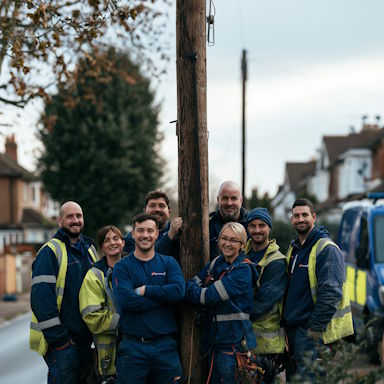
However, unions remain influential. The Communication Workers Union (CWU) played a key role in shaping and promoting Labour’s “New Deal for Working People” campaign, helping place stronger employment rights, protections from unfair dismissal and limits on insecure contracts firmly on the political agenda.
Today, the link endures but is evolving, balancing historic partnership with modern political strategy.